

Getting Dirty During the Alcan 5000 -- Part One

The Alcan 5000 Rally might not be what you think of when you think of rallying a car. It’s not an event chocked full of sideways-sliding Subarus or overpowered hatchbacks catching air over hills as hundreds of fans gaze as rabid drivers hurtle through the woods in search of the fastest stage of a gravel rally.
No. That’s stage rally. The Alcan 5000 is a time-speed-distance (TSD) rally, and it’s a really long one. Try 5,000 miles worth from Washington state up to Alaska and parts of Canada. Oh, and it’s done in 10 days. And this isn’t something new; it’s been going on since 1984. It also involves some sleep deprivation, questionable eating habits, and long division. Yes, you read that right.
The Alcan 5000 was started in the mid-1980s by Jerry Hines, who got the idea for a multi-day TSD rally from events he’d attended in Mexico in the 1970s. He took the idea north of the border (two of them actually) and has been doing the Alcan 5000 ever since.
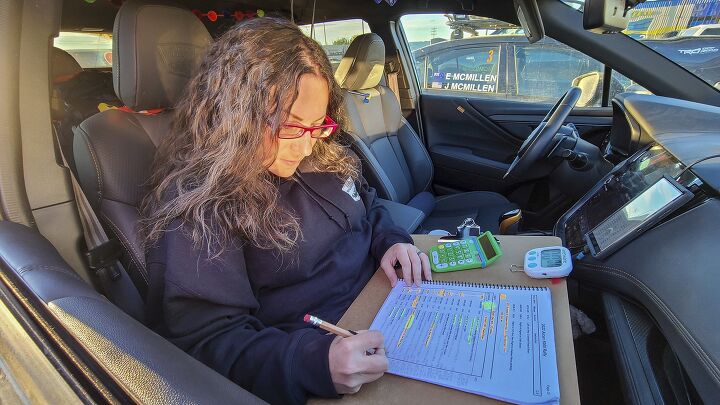
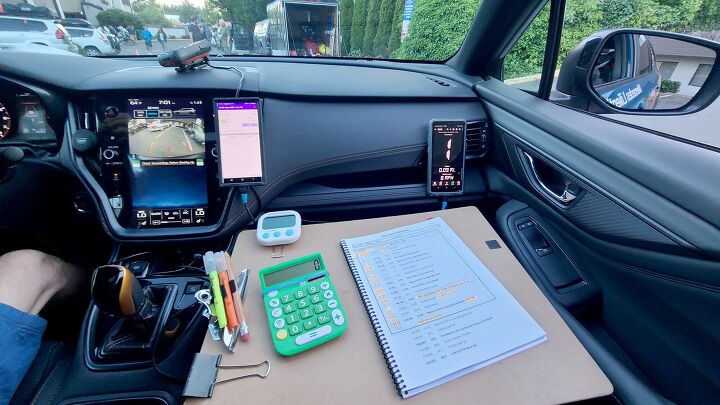
The event happens on a schedule like the Olympics. It’s every two years and alternates between summer and winter. The 2020 Alcan 5000 was a winter iteration (and was my first Alcan Rally), 2022 was a summer version, and 2024 will be winter again. Being that it’s a TSD rally, the object isn’t to finish the fastest, it’s to finish the most accurately. Here’s where the long division comes in. There are formulas entrants can use to calculate how long it should take to get through the rally’s various sections, and it’s pretty complicated. Once you get the formula, however, it’s a matter of putting in the right numbers to get your calculations. There are multiple classes for this including unlimited, which allows rally computers the ultimate in accuracy, as well as “SOP” which stands for “seat of pants.” This does not allow for rally computers and means there’s a lot of math going on.
Every Alcan 5000 has a slightly different route with different TSD sections. This year the group of 28 four-wheeled vehicles and 17 adventure motorcycles would start in Kirkland, WA, head as far north as Dawson City, Yukon (via an optional trip to Skagway, AK), zoom over to Yellowknife, Northwest Territories, before finishing in Jasper, Alberta. So that’s two states, two Canadian provinces, and two Canadian territories. Total mileage was slated to be just over 5,000 in just 10 days.
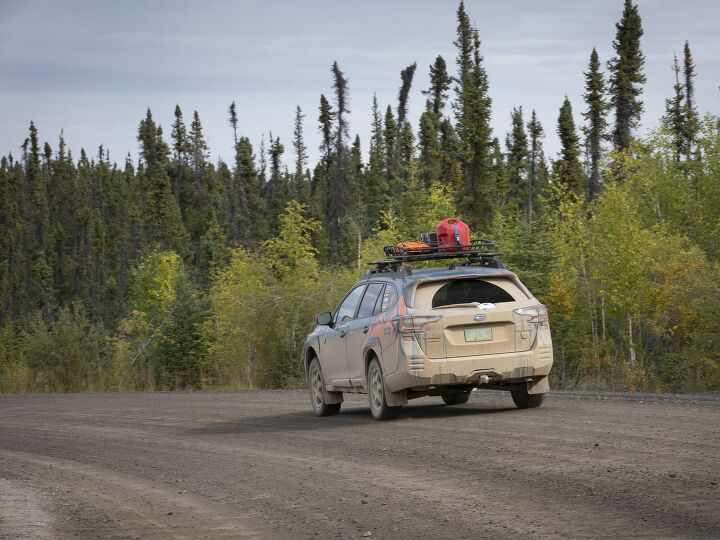
For 2022, fellow writer, and my wife, Mercedes Lilienthal, and I entered into this madness for the second time, but our first summer Alcan 5000. I’d drive, she’d be the co-driver/navigator. This year, instead of entering our personal previous entry, our JDM 1991 Mitsubishi Pajero XP, complete with a 100 horsepower diesel engine, Subaru of America provided us with a 2022 Outback Wilderness. With over 160 more horsepower and 107 lb-ft more torque, it’d prove to be much more rapid than our road-going Mitsubishi tractor … I mean Pajero.
PREP
Back in 2020, somewhere around the Arctic Circle, my wife and I pondered what the perfect Alcan 5000 vehicle would be as we’d get passed by competitors in Porsche Macans and Cayennes; all-wheel-drive Toyotas, and boosted Subarus. We came to the conclusion anything with good power, ample ground clearance, and plenty of comfort would be right. That’s why we ended up pitching Subaru on the Wilderness. With 260 hp, 9.5 inches of ground clearance, and factory all-terrain tires, it sounded like a great choice.
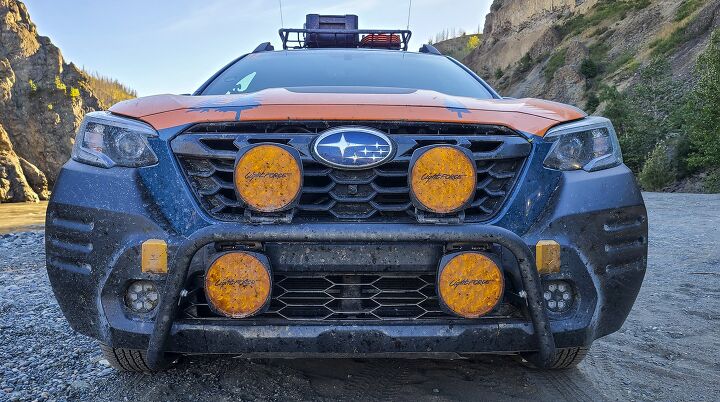
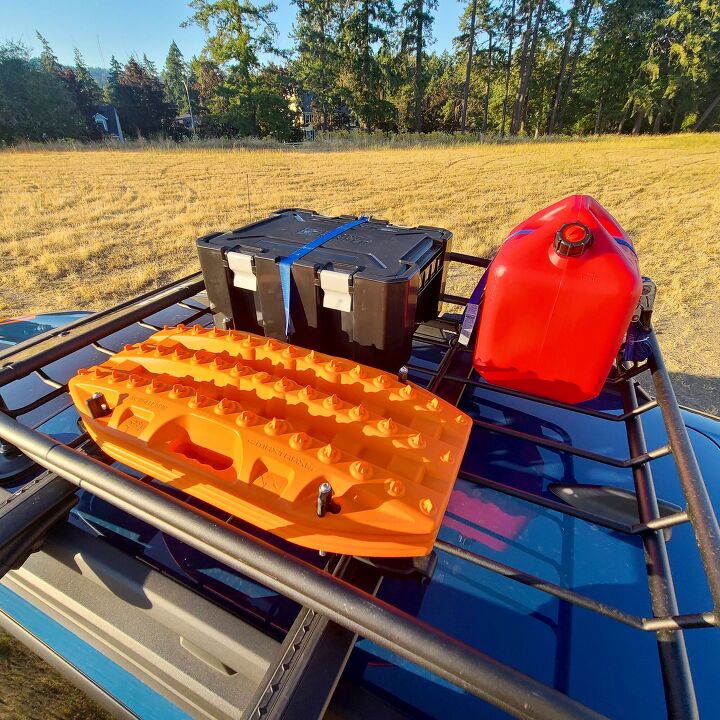
There wasn’t much modification needed for the summer rally compared to the ridiculous amount I did on our ’91 Mitsubishi to make it winter-rally ready. We were in a nearly new Subaru with all kinds of modern amenities compared to our barely ‘90s Mitsubishi in 2020. We chose to add a few things including a Rally Innovations light bar to mount four Lightforce Venom LED lights in case of low visibility at night – something we experienced lots of on the 2020 rally. The car had a Thule rack and basket as well as a trailer hitch, all of which were factory accessories. We threw on a Front Runner Wolf Pack Pro cargo box, a set of Maxtrax Mini traction boards, and a five-gallon gas can in the roof. We also threw a Factor 55 HitchLink 2.0 in the 2-inch trailer hitch. This would provide an easy-to-access recovery point if we needed to use it. We also had a full bit of recovery kit from Warn Industries in case. Some new Ledlenser headlamps, magnetic Scosche mounts for our phones and race radios, and a bright graphics package, and we were ready to go.
HOW THIS WORKS
Every vehicle gets a number and that’s your out time. We were car 12, so we were out at 8:12 am on day one. Your out time is always the number of minutes tacked onto the initial time out (often called car zero, which is the vehicle that initially ran the route for planning). You also go based on the car zero mileage calculations. And despite this being 95 percent in Canada, the rally itself is run in miles, not kilometers.
Participants do an odometer calculation leg before the rally. This lets teams see how far off their odometer is versus the official route odometer. You’ll need to factor that into your long division to be accurate, by the way. The goal of a TSD rally is to have a low score. You’re penalized if you’re early or late to a checkpoint. A perfect score is zero. This all has to be preplanned out by both mileage and time. The average speed is also provided, and you have to make all three variables work.
The Alcan 5000 mixes brief TSD events with massively long transits. While a local rally club’s weekend TSD might be 150 miles or so with a couple of 5-to-10-mile transits to the next leg, the Alcan 5000 has TSDs that are around 50 miles or so paired with one massive 600-mile transit to either the evening TSD or simply to that night’s hotel.
This event has a good mix of hardcore TSD rally participants as well as novices. There is a touring class that isn’t scored for those who prefer to leave the long division at home.
ON THE ROAD
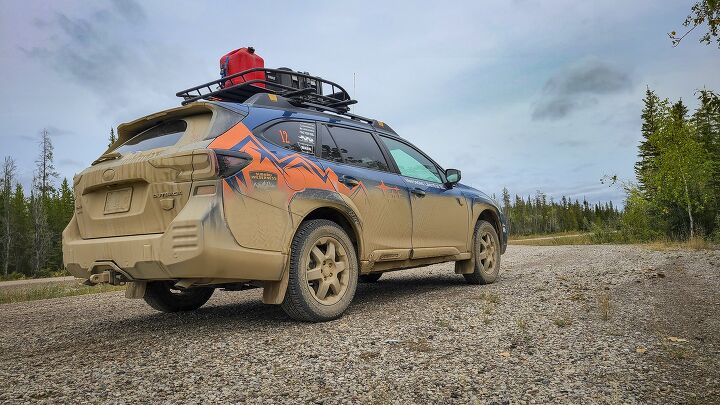
Mornings almost always start with a TSD between 7 am and 8 am. Then you hit the road. Meals are generally your responsibility, as is fuel – and bringing enough of it. Keep in mind, we’re going through some sparsely populated areas of Canada. There aren’t fuel stations every 50 miles. The organizers generally say your range should be a minimum of 250 miles. There’s a saying about fuel on the event: Never pass gas on the Alcan 5000.
Jerry Hines and his band of preplanning team members generally provide excellent routes that pass through scenic vistas and winding roads. About 30 percent of this year’s rally was on gravel or dirt. While that doesn’t sound like a lot, 30 percent of 5,000 miles is 1,500 miles. That’s like driving from Los Angeles to Calgary off pavement.
In addition, there are what are referred to as extreme controls. These are optional routes that usually play into the points standings. If you don’t do them, you may end up with extra points tacked onto your score. If you do all of them, you can receive an extra award called the Arctic Award.
Some of the TSD sections are also on dirt or gravel. This adds another level of complexity to the mix as drivers need to ensure they don’t get onto a soft shoulder, hit a tree, or get stuck in a mud hole. It’s all part of it.
THIS YEAR’S ROUTE
Day one took us from Kirkland, WA. across the Canadian border and up to Quesnel, BC. This day was all on pavement and took us through the beautiful sections of south-central BC. We all checked into the Billy Barker Casino Hotel in Quesnel (which looks like a stern-wheeler riverboat).
The second day had us depart Quesnel for the mountain town of Smithers, BC. Along the way, we’d take hundreds of miles of dirt roads in an effort to stay on time—and on course. We ran into herds of cows, narrow dirt trails, and twisty gravel sections. The Outback Wilderness was proving to be a wise choice as the added ground clearance kept us from bottoming out on the trails; the standard Yokohama Geolandar A/T tires were also champs giving great traction in loose dirt.
Day three is when things really started to feel like we were going north. This route would go from Smithers to Watson Lake, YT with an Extreme Control to Telegraph Creek. This is a very small remote village and home to many indigenous people. The 112 km dirt road to the village is filled with switchbacks, 20 percent grades, and incredible vistas. By the way, there’s plenty of wildlife to watch for during the rally. We saw bears, caribou, elk, foxes, porcupines, bison, and a host of more common animals.
This day ended up being exceptionally long. The 112 km drive (each way) on top of the standard drive route had us arriving in Watson Lake around 11:30 pm, which meant we’d been driving for about 16 hours. We got a chance to use those Lightforce lights, too. There was no one around and they really helped with overall visibility as well as trying not to turn hit any of nature’s little creatures. Or moose. There are moose.
On day four I was reminded of the psychological aspect of this rally. 5,000 miles in 10 days is a lot, especially when there’s competition and animals ready to dart out in the road. Oh, then there’s the lack of regular eating, the long division, and just overall fatigue. Also, when your hotel in Watson Lake is also a liquor store, sleep isn’t always the easiest.
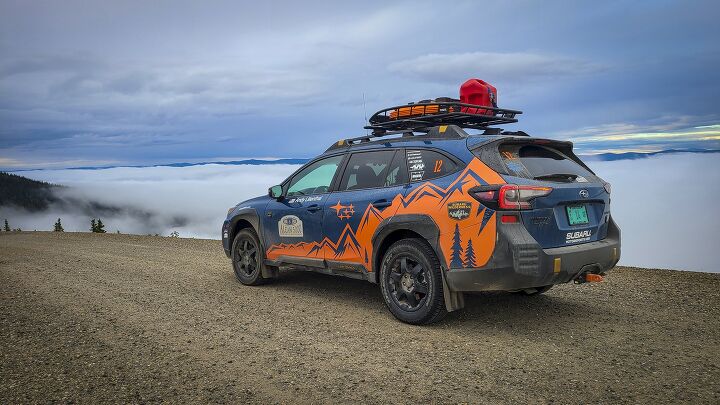
Regardless, we pressed north from Watson Lake, and crossed into Yukon Territory, with the frontier town of Dawson City as our farthest north destination, despite it being about halfway through the grueling event. When you get this far north, things start to change. The road becomes worse. The bugs get worse. The scenery gets better, and whether or not you made the right car choice becomes apparent. Again, the Wilderness’ suspension performed like a champ. The heaping frost heaves, potholes the size of caribou, and the occasional long gravel section of dirt all had us happy we were in the vehicle we were in. Once we arrived in Dawson and checked into our historic Downtown Hotel, we went to the infamous Sourdough Saloon for dinner and a cocktail of Yukon Jack honey whiskey and a severed and mummified human toe. It's called a Sour Toe Cocktail and yes, it’s a real thing. Google it.
The next morning’s TSD was filled with fog and hills. If I had one gripe about the Subaru it’s the continuously-variable automatic transmission. While CVTs have come a long way, they still do CVT things like holding revs when they don’t need to, and not delivering the power when you might want it. I found using the car’s manual mode pivotal when doing the TSDs during the day. If I had to maintain an average speed of 44 MPH, it was easier to just kick it into “fake third gear” and hold the speed that way versus relying on the CVT. It wanted to constantly fall below, or then rocket past, the average speed as prescribed by our route book.
After our TSD it was back south along the same narrow, bad, and pothole-strewn highways and roads. The scenery was still great; the roads were still not. Instead of passing through Whitehorse, YT, we’d stop there for the evening. Now, this could be a short day if competitors went directly to Whitehorse – only 362 miles. However, there was another extreme control. This one would take you back across the border into the port town of Skagway, AK, and tacked on an additional 194 miles. And of course, we had to do that.
The drive to Skagway from Whitehorse is stunning. The closer you get to Alaska, the more amazing it gets. Unfortunately for us, the closer we got, the thicker the fog got. Regardless, it was alien and beautiful. Once in Skagway, we had to go to the ferry terminal, take a photo, ping our rally app to prove we were there, and then we could head back to Whitehorse for the evening. And yes, this was another late night. Not as late as Watson Lake, but there was only one restaurant open anywhere near us.
What day are we on? Who knows. I certainly didn’t during the rally. And forget about what the actual date was. As the driver, three-quarters of the time I didn’t even know what the next destination would be. I’m just listening to my co-driver. Anyway, I was told by my wife we’d go from Whitehorse, YT over to Fort Nelson, BC. The drive had some newly paved glass-smooth asphalt, which was a nice change. Plus, we saw tons of wildlife around the Muncho Lake area. This was a great drive day. We grab dinner with some of the team members, and I’m headed to bed early! However, right after I get into bed, Jeff texts and says “Get out here. Now.” There’s an incredible photo of the Northern Lights attached. Holy smokes. We throw on shoes and run outside to witness the best Northern Lights show either Mercedes or I had ever seen. It’s memories like this that add to the Alcan 5000 experience. It builds that camaraderie the event is known for. And it makes the entire thing totally worth doing.
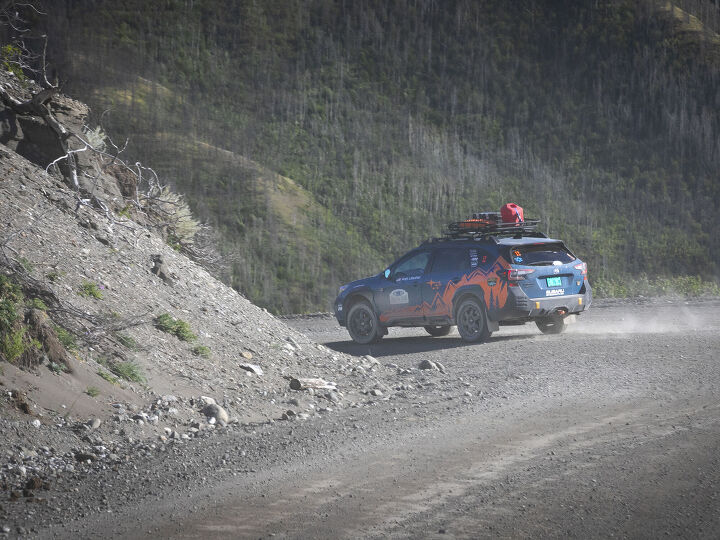
After our morning TSD, we left Fort Nelson after the first real breakfast of the trip (we’d been eating freeze-dried Mountain House backpacking food for breakfast in the morning in an effort to stay on time). We’d be en route to Yellowknife, NWT. There were massive forests that had succumbed to forest fires in years past. We also did hundreds of miles of dirt roads, many of which were wet. We’d pass water trucks. We’re told they’re not spraying pure water, but a mix of water and calcium chloride. This mix helps to harden the dirt. It also hardens it onto your vehicle. Friends were also telling us it’s very corrosive. In the wintertime, it’ll melt orders of magnitude more ice than road salt, so they use it a lot up here year-round.
We roll into Yellowknife tired, our Subaru completely covered in mud, and ready to get some shuteye. Thankfully, the next day was our only day off. There was a short extreme control around some scenic lakes and such, but that was only 90 miles and we’d go back to the same hotel. We slept until 8 am that morning which felt like 2 pm. We do the extreme control, fuel up, get some food and beer at a local brewery, and get ready to leave NWT’s capital city for Peace River, Alberta.
I grew up in Minnesota and Wisconsin. These are two fairly flat places with short trees and wide-open spaces. This personifies northern Alberta. In fact, it looked a lot like MN or WI. And while these areas have a different kind of beauty, the long drive days and long division were starting to catch up with us. It also didn’t help that the roads were also much less entertaining than they were in BC. And then, lickety-split, we’re in Peace River.
You know the drill, morning TSD then we’re headed for our next destination. And in this case, it’s the last one: Jasper, Alberta. This drive day took us on a long gravel haul road – a cutoff for semi-truck traffic and large loads. It was a very short drive day – a scant 373 miles. We were in Jasper by midafternoon. And before we knew it, we had completed yet another Alcan 5000. The 39th running of the event, in fact.
MORE THAN JUST A TSD RALLY
It’s hard to explain how grandiose this event is. You get home, put the route into Google Maps, and you realize that it’s the same amount of miles as driving to Peru. It’s a multi-fighter steel cage match of man versus machine vs other people vs the elements vs your own psyche. But you’re among fringe lunatics. These are other people who voluntarily signed up for this lunacy. People who choose to drive 5,000 miles in classic Minis, Jeep Wranglers, Porsches, and Subarus. These people love road-tripping as much as they do rally competition. From a pair of teenagers in an Audi 4000 to solo motorbike riders well into their 70s, this event attracts a certain kind of person. It’s a unique blend of herbs and spices, but the end result is awesome. It’s fun, challenging, frustrating, tiring, and awe-inspiring. I can’t wait until 2024.
[Images courtesy of the author/Mercedes Lilienthal]
Become a TTAC insider. Get the latest news, features, TTAC takes, and everything else that gets to the truth about cars first by subscribing to our newsletter.

More by Andy Lilienthal








Comments
Join the conversation
Great story, Andy! Two questions: what became of your car, and how do racers deal with breakdowns?
Its articles like this and Corey Lewis's series that keep me coming back to TTAC . Well done !