
Toyota Begins U.S. Production of Top-Selling RAV4 Hoping to Sate Red-Hot Demand
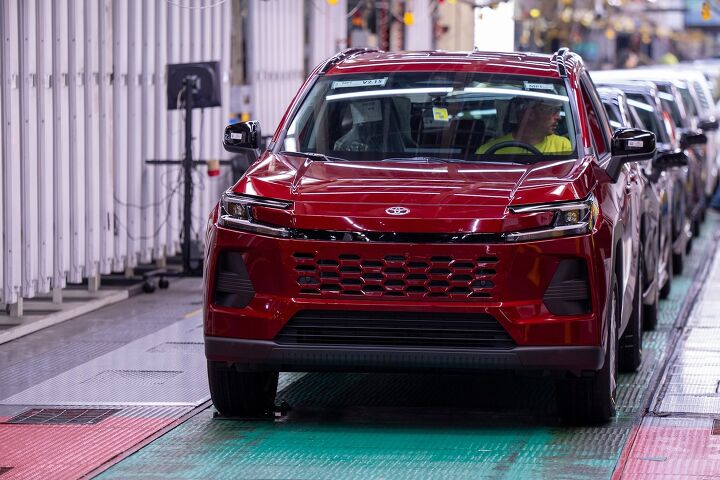
Toyota’s long national nightmare is over. The automaker’s $2 billion investment in its Kentucky plant began paying off as the first all-new RAV4 rolled off the production line after months of asking buyers to be patient.

“Making our customers smile by delivering high-quality vehicles like the all-new RAV4 Hybrid has been our legacy for 40 years,” said Kerry Creech, president of Toyota Kentucky, in a release. “The milestones we celebrate today reflect our team’s commitment to sustainability and our unwavering promise to continue to deliver vehicles our customers love.”
The RAV4 is the best-selling SUV in the United States, and despite its popularity, Toyota made changes to the newest version in order to address several issues. In order to do that, it had to expand its Georgetown, Kentucky plant in order to meet consumer demand. Toyota now builds the RAV4 in three plants — Kentucky expanded RAV4 production 40,000 units annually — in order to meet the demand for the ute.
According to Automotive News, the RAV4 has a turn rate well above 95 percent, including 97.6 percent in May. Dealers have waiting lists — some with hundreds of names — for the vehicles, and there are plenty of examples the vehicles being off-loaded from the car carrier and basically handed over to a buyer.

Because of the model changeover, Toyota had to make adjustments to the production lines at the plants producing the vehicle. While that took place, sales of the RAV4 dropped about 40 percent because the run rate was much slower as the plants made the conversion from the old version to the next-generation model.
Toyota Kentucky is increasing its role in meeting growing customer demand for electrified vehicles by supporting Toyota’s multi-pathway approach to electrification and will also launch the new Highlander Battery Electric Vehicle in September 2026.
[Images: Toyota]
Become a TTAC insider. Get the latest news, features, TTAC takes, and everything else that gets to the truth about cars first by subscribing to our newsletter.

Michael Strong has spent more than 25 years writing about the automotive industry. A Detroit-area native, he’s written about everything from local car shows to product reviews to financial news. Currently he writes and edits for a variety of national and local publications. He’s also a longtime member of the Automotive Press Association and the International Motor Press Association, and a graduate of Georgia Southern University. Hail Southern! Despite a love for ’70s land yachts and BMWs from the late ’80s and early ’90s, his personal vehicle is neither of those.
More by Michael Strong








Comments
Join the conversation
https://www.motor1.com/news/799581/toyota-nissan-us-import-models-poor-quality/
I’m wondering why they don’t use the free-piston generator they’re building in an EREEV version of the rav4 ?