


Hyundai Readying New EREV Models Starting in 2027

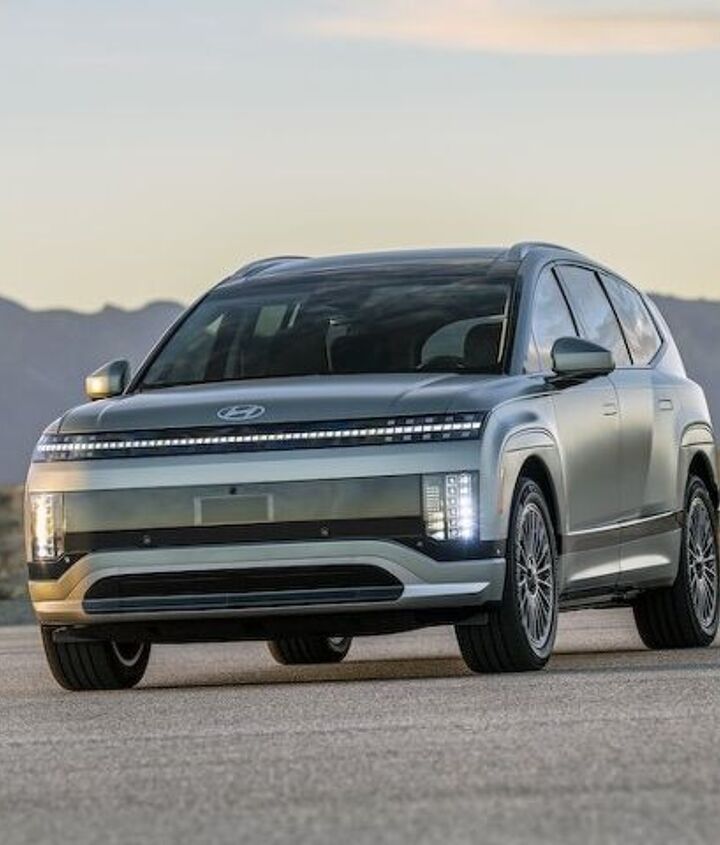
Hyundai has built quite the electric vehicle business over the last few years, but its upcoming release takes its electrification efforts in a different direction. The automaker is expected to announce a new extended-range EV, its first, which will go on sale in 2027.

Extended-range EVs (EREVs) function as electric vehicles but use a gas engine as a generator to charge the batteries, extending the range. There haven’t been many such vehicles available in the United States, but that’s changing with new models from Ram and others in the coming months.
Hyundai plans for an impressive range number with the new system, saying, “Launching in 2027, Extended Range EVs (EREVs) will utilize high-performance batteries and motors to deliver EV-like driving experiences with more than 600 miles (960km) of range through optimized battery-engine integration.”

In addition to boosting range, EREVs utilize smaller batteries, which could make them slightly more affordable than full battery-electric models. Hyundai’s statement reads, “Unlike conventional EREVs, Hyundai’s approach utilizes in-house high-performance batteries, achieving full EV power performance with less than half the battery capacity, improving accessibility while maintaining exceptional range and performance, and eliminating range anxiety.”
Hyundai also noted that its EREV tech would extend to Genesis products in the future. It plans to expand availability of the EREV powertrain to more than 18 models by the end of the decade, with the first Genesis models being introduced next year.
[Images: Hyundai]
Become a TTAC insider. Get the latest news, features, TTAC takes, and everything else that gets to the truth about cars first by subscribing to our newsletter.
Chris grew up in, under, and around cars, but took the long way around to becoming an automotive writer. After a career in technology consulting and a trip through business school, Chris began writing about the automotive industry as a way to reconnect with his passion and get behind the wheel of a new car every week. He focuses on taking complex industry stories and making them digestible by any reader. Just don’t expect him to stay away from high-mileage Porsches.
More by Chris Teague









Comments
Join the conversation
We do agree on plugging in!
But what frustrates me is that the "nuts and bolts" DO matter to how people use the vehicles in the real world. A series hybrid, whether you call it an "EREV" or not, is going to be the best tech for people who aren't ready for pure EV but do most of their driving in a dense city. A conventional hybrid with a single motor behind an automatic transmission may be the most cost-effective tech for people who do most of their driving on the highway. Plug-in may or may not make sense depending on how much a driver drives during each driving day. And so on.
That's why we need a way to talk about these things that is actually comprehensible to the average person, and can eventually work its way into the same every day knowledge base that currently contains things like "Cars need oil changes" and "Big trucks get bad gas mileage."
My money is this will operate just like a Chevy Volt. Three modes: EV, Series Hybrid, Parallel Hybrid. If it is a true series hybrid I'd expect the fuel economy to be awful once the battery is exhausted unless there is some new tech. pioneered in it.
When first introduced, GM wanted to hide the fact that the ICE in the Volt would couple with the drive wheels under certain conditions with an exhausted battery. Not sure what the big deal was as the reason for it was simply better efficiency while in gas mode. The BMW I3 was a true series hybrid and that was an absolute disaster in rathe extending mode. Has Hyundai figured out how to make an efficient series hybrid?