
What Happened to “Job One”?
Ed. note -- We have yet another TTAC Content Creator starting today. He's Gary Vasilash, a long time automotive industry observer/writer/journalist.
The headline on a news release from Ford surprised me:
“Ford Receives Most Honors of Any Brand in 2025 J.D. Power Initial Quality Study”

The J.D. Power IQS is based on surveys of 92,694 purchasers or leases of model year 2025 vehicles that they’ve had for 90 days.
The surprise is because Ford has issued over 80 recalls this year, and we’ve still got months to go.
To put that number into some context, know that the company in second place is Volkswagen Group with 14 recalls.
And while the VW recalls affect some 440,000 vehicles, the Ford recalls affect more than 4 million.

Back to the release.
It points out that they have more category winners than any other brand, or as the company puts it: “Ford is the most awarded brand in the J.D. Power 2025 U.S. Initial Quality Study.”
Which is fairly clever phrasing.
That is, while General Motors has more model-level awards—five—of that number, three are Chevys, and Cadillac and Buick have one each. But General Motors is a company, not a brand. Chevrolet is a brand.
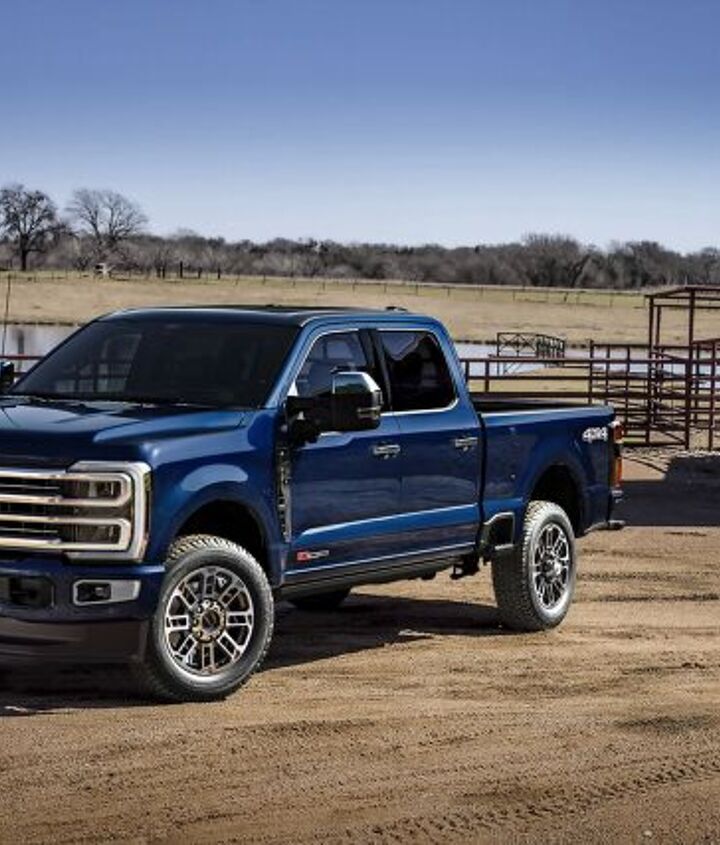
Ford brand has four—Escape, F-150, Mustang, and Super Duty—so that trumps Chevy.
But there’s something else about Ford brand that should raise an eyebrow.
There is ranking of brands by problems per 100 vehicles (PP100). A lower number is better.
Lexus comes in first with 166 PP100.
The average of all vehicles is 192 PP100.
Ford is at 193 PP100. Just below average.
Chevy is at 178 PP100. Above average. And in fifth place overall.
Ford is in 14th.
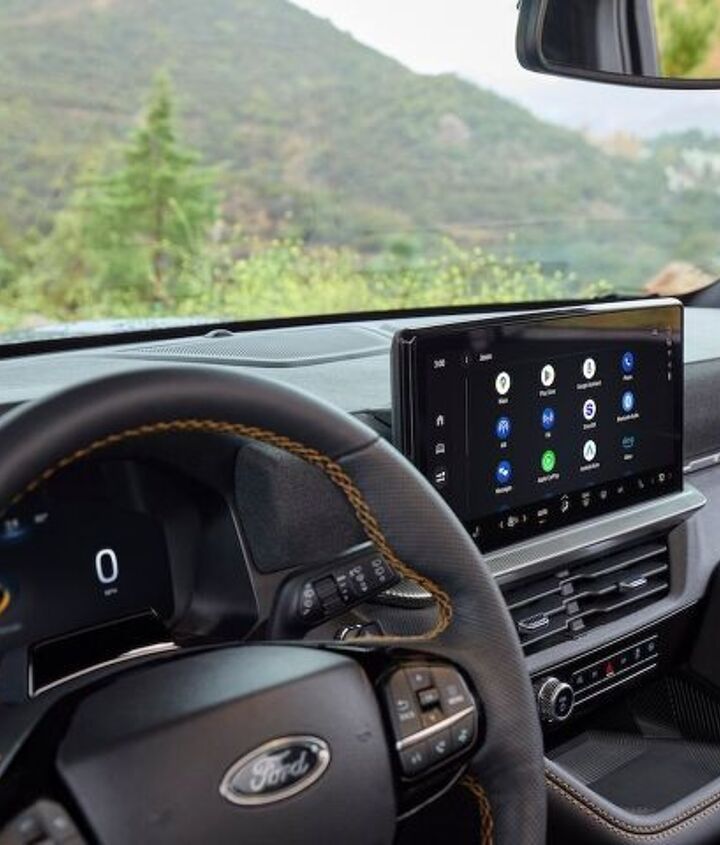
And consider the Escape. In 2025 there have been four safety recalls: rearview camera inversion; instrument panel cluster illumination failure; passenger side instrument panel cover/airbag deployment; cylinder head defect.

The Mustang has one for a transmission valve body problem, as has the F-150.
The Super Duty just had a recall for brakes.*
The J.D. Power study was conducted between June 2024 and May 2025 and the Escape owners didn’t start receiving letters about the cylinder head defect until late June 2025, so maybe those surveyed didn’t feel concerned about three recalls.
In 2024 Ford lost some $4.8 billion dealing with recalls.
That is a tremendous amount of money that could have been better spent elsewhere.
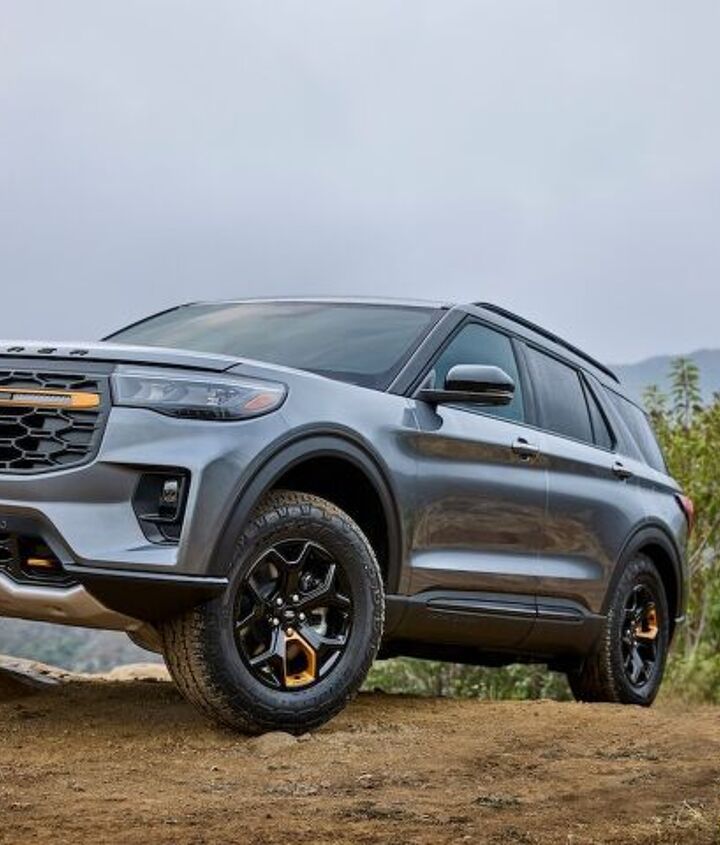
Ford CEO Jim Farley is no shrinking violet when it comes to addressing issues. He has acknowledged that Ford has on-going quality problems that need to be nipped in the bud.
But he became CEO in October 2020 and since 2021 Ford has racked up more than its share of recalls.
In 2024 Ford had 62 recalls in the U.S. There were 57 in 2023. There were 67 in 2022 and 53 in 2021. Clearly, the trend isn’t good.
And there is another metric that Ford doesn’t do well in and hasn’t particularly in the last few years.
In the Working Relations Index (WRI) conducted by Plante Moran, which is a survey of how suppliers think about the OEMs they do work for, Ford is fifth out of six.
In this case a higher number is better.
Here are Ford’s recent WRI numbers:
· 2021: 249
· 2022: 242
· 2023: 219
· 2024: 197
· 2025: 191
Going south is not the direction a company should be heading.
And to compare those numbers with those of General Motors:
· 2021: 289
· 2022: 287
· 2023: 297
· 2024: 299
· 2025: 310

Yes, GM is going north. And GM is currently in third place in the WRI.
And the Toyota numbers (yes, it is at the top of the list) are so high compared to Ford’s that they could find themselves on another chart entirely.
The point of this is simple: 70% to 80% of the components that make a vehicle are sourced from suppliers. If you don’t have good supplier relations it doesn’t mean that the suppliers are going to send bad parts but that the supplier is going to be less keen on making sure that everything goes as well as it possibility can.
Clearly things aren’t going particularly well at Ford.

Quality isn’t inspected in. It is designed and engineered in.
Jim Farley worked at Toyota from 1990 to 2007, when he went to work for Ford. He knows that suppliers are important. He knows about the importance of design and engineering.
Why this message isn’t resonating throughout the Ford system is a mystery because headlines about J.D. Power survey wins surely isn’t helping the company reduce its high level of recalls.
///
*When I started writing this the number of Ford recalls was 82. The Super Duty recall happened last Thursday, which makes it 83. While I certainly hope that this won’t be the case, I am being deliberately vague with the total number because it could be changed before I hit the “Publish” button.
Long-time automotive journalist Gary Vasilash is co-host of "Autoline After Hours" and is a North American Car, Truck & Utility of the Year juror. He is also a contributor to Wards Auto and a juror for its 10 Best Interiors UX and 10 Best Engines & Propulsion Systems awards. He has written for a number of outlets, ranging from Composites Technology to Car and Driver.
The TTAC Creators Series tells stories and amplifies creators from all corners of the car world, including culture, dealerships, collections, modified builds and more.
Check out Gary's essay here and his Substack here.
[Images: Ford, Lincoln]
Become a TTAC insider. Get the latest news, features, TTAC takes, and everything else that gets to the truth about cars first by subscribing to our newsletter.

Long-time automotive journalist Gary Vasilash is co-host of "Autoline After Hours" and is a North American Car, Truck & Utility of the Year juror. He is also a contributor to Wards Auto and a juror for its 10 Best Interiors UX and 10 Best Engines & Propulsion Systems awards. He has written for a number of outlets, ranging from Composites Technology to Car and Driver.
More by Gary Vasilash




Comments
Join the conversation
Ford's brilliant engineers designed a wet timing belt system against ALL good engineering principles. IF the belt doesn't catastrophically fail and destroy the engine quickly, particles from the deteriorating belt eventually clog the oil pickup and lubrication starvation kills the engine slowly.
It should not be a surprise that this company has quality problems.
That slogan got recalled.