


Gas War: California May Ban Gas-Powered Lawn Equipment

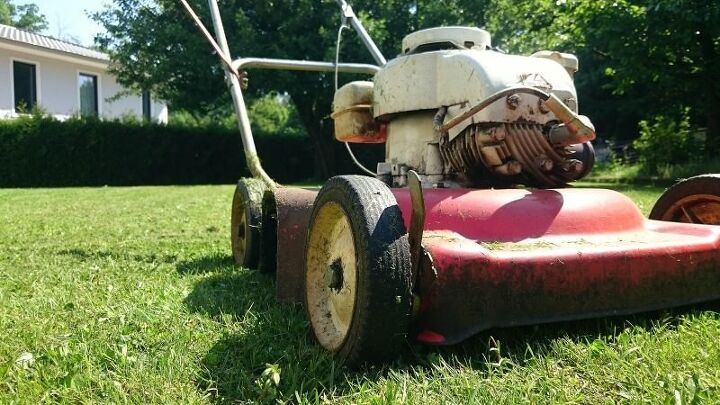
The California Air Resources Board (CARB) has decided that residential lawn equipment is a major problem. Claims have been made that the small engines found inside of the average leaf blower emit the same amount of smog-forming pollution in a single hour as a 2016 Toyota Camry could produce over a 1,100-mile drive.
Assertions like these have been used to forward Assembly Bill No. 1346, which requires the board to define and then pull the trigger on new regulations designed “to prohibit engine exhaust and evaporative emissions from new small off-road engines” by 2022. CARB then has to decide whether or not it can outright ban them, so they may be replaced by zero-emission equivalents after 2024. Considering how decent most electrified tools have grown to be, this doesn’t sound infeasible. But it’s another example of California’s obsessive hatred of consumers utilizing liquid fuel and bound to have major ramifications.
Small off-road engines ( which CARB references as “SORE”) do indeed emit more nitrogen oxides and particulate matter than you might expect. But the board is oversimplifying things to advance its regulatory agenda, much in the same way we used to see motorcycles getting bashed for not processing catalytic converters.
Prior to 2010, most bikes didn’t have them. But CARB’s Tier 2 standards changed all of that and the organization went around fining anyone who had the balls to sell aftermarket or OEM pipes without emission-control devices. Fines went directly back to the California Air Resources Board, which is comprised entirely of unelected regulatory officials, and its multitude of programs. It was a successful imitative for the organization and it now seems interested in launching something similar for lawnmowers and weed whackers.
Here’s the truth of the matter. Small engines tend to emit substantially more hydrocarbons, carbon monoxide, and nitrogen oxides than your typical family sedan. But they’re also going to be more economical, requiring far less pumping and refinement of petroleum. They likewise require — and go into products using — a fraction of the resources and energy that an automobile would. This has remained true even as fuel injection and carbon capture have become normalized on motorcycles and some lawnmowers.
But small engines aren’t all equal and the increased regulatory pressures placed on motorcycles have encouraged the industry to move toward smaller engines and older hardware in a bid to keep prices down. Bike manufacturers also found themselves having to add equipment onto a vehicle that’s primary selling point (ignoring the fun factor) is how affordable it is to purchase and run. Meanwhile, cars cost significantly more have seen emissions compliance evolve over a much longer timeline — helping to mask the associated costs.
Consumer advocates are concerned that modifying lawn equipment to comply with new regulations will make them non-competitive against electric alternatives on a scope exceeding the Californian market. Fines may also become a problem, with companies selling gas-powered at an obvious disadvantage. Assuming the subsequent ban is similarly greenlit, those businesses would no longer be allowed to sell their equipment after 2024. But advocates are claiming that it’s all for the greater good, noting that motorcycles have become much cleaner to operate over the last few decades due to CARB’s regulatory action.
AB 1346 says it would offer incentive programs to people buying the new, zero-emission equipment and has set aside $30 million to help citizens and businesses replace their old hardware. It’s familiar to a lot of the legislation it’s been throwing around to help mainstream EVs. But the bill is currently written using a lot of vague terms with the Californian board having to define a course of action on the fly.
From Section 43018.11 to be added to the Health and Safety Code:
(a) (1) By July 1, 2022, the state board shall, consistent with federal law, adopt cost-effective and technologically feasible regulations to prohibit engine exhaust and evaporative emissions from new small off-road engines, as defined by the state board. Those regulations shall apply to engines produced on or after January 1, 2024, or as soon as the state board determines is feasible, whichever is later.
(2) In determining technological feasibility pursuant to paragraph (1), the state board shall consider all of the following:
(A) Emissions from small off-road engines in the state.
(B) Expected timelines for zero-emission small off-road equipment development.
(C) Increased demand for electricity from added charging requirements for more zero-emission small off-road equipment.
(D) Use cases of both commercial and residential lawn and garden users.
(E) Expected availability of zero-emission generators and emergency response equipment.
(b) Consistent with the regulations adopted pursuant to this section and relevant state law, the state board shall identify, and, to the extent feasible, make available, funding for commercial rebates or similar incentive funding as part of any updates to existing, applicable funding program guidelines for districts to implement to support the transition to zero-emission small off-road equipment operations.
My take? While I don’t disagree that it’s objectively better to have lawn-care equipment that’s quieter and emits less pollution, California really needs to chill out. CARB’s initiatives often impact the rest of the United States and its latest regulatory efforts seem reactionary, poorly defined, and totally at odds with a free-market economy. Electric tools continue getting better and a lot of people are making the decision to transition away from gasoline-powered equipment anyway. Handicapping the industry’s competitive spirit via AB 1346 serves to do nothing more than punish half the market so the other can have an unfair advantage, all while CARB continues to line its pockets and gain influence.
[Image: David Schwimbeck/Shutterstock]
Consumer advocate tracking industry trends and regulations. Before joining TTAC, Matt spent a decade working for marketing and research firms in NYC. Clients included several of the world’s largest automakers, global tire brands, and aftermarket part suppliers. Since adding automotive writing to his repertoire, he has become an ardent supporter of the right-to-repair movement, discussed the status of the automotive sector on national broadcasts, participated in a few amateur rallying events, and driven more rental cars than anyone should ever have to. Handy with a wrench, Matt grew up surrounded by Detroit auto workers and learned to drive by twelve. Alleged to be contrarian, Matt claims to prefer understeer and motorcycles.
More by Matt Posky









Comments
Join the conversation
@burnbomber--Agree. Suburban Oklahoma is not as congested as Los Angeles, Chicago, New York City, or Houston so the same standards for pollution should not apply. Same for those of us who drive our well maintained older vehicles 10 years or more but drive below the average number of miles. Much less of an impact and definitely better environmentally to keep a vehicle properly maintained and keep it longer than the environmental impact of producing new cars. I do fear as some have expressed above that the rest of the country seems to follow what California does and what works in Los Angeles does not necessary work in Tulsa.
Most lawn care equipment comes in 20v; 40v; or 60v formats from lawn mowers, to edgers, to blowers. I already have 20v power tools, so moving to battery lawn equipment is a natural progression. I do feel for the professional landscapers who will need a stack of batteries to cover a day’s work. My only complaint is the alarming number of nuclear power plants which have recently shut down. Some of this lost power is backfilled with carbon emitting coal or natural gas plants…..especially in Europe. Go tell that to your California Eco Terrorist as he rides his Lear jet to the upcoming Eco summit in Scotland this fall.