


Die Rivalitt: BMW Ekes Out Another Sales Win Over Mercedes-Benz
Without rivalry, there wouldn’t be sports, and the Atlantic Ocean probably would have been crossed for the first time by a multinational team assembled sometime in the late 1930s, backed by a top-heavy bureaucracy.
Rivalry, at least outside the workplace, is usually fun, and the fierce competition among Germany’s luxury marques remains an interesting one, simply due to the length of time this has been going on. U.S. sales figures from August show that Mercedes-Benz, which muscled out long-running best-seller BMW from its lofty perch in 2016, has at least some reason to be worried about its rival reclaiming lost ground.
Not the first time this year, BMW outsold Mercedes-Benz’s passenger vehicles division in the U.S. last month — 23,789 units to M-B’s 20,339. That figure omits M-B’s commercial vehicles, which, when factored into the brand total, spells a vanishingly slim win (24,084) for the world’s oldest automaker. In June, Bimmer trounced its rival in overall sales, including retail and commercial, and came within 36 units of doing so in March.
Mercedes-Benz, which held the German luxury crown in the U.S. for the past two years, claims it isn’t worried about August’s numbers.
In a statement reported by Automotive News, the automaker’s U.S. CEO, Dietmar Exler, said, “While customer demand remains high, our inventory levels are impacted by delayed availability of many of our 2019 models,” adding, “We are currently replenishing the inventory of our popular 2019 CLA-, GLC-, E- and GLS-class this month.”
Overall, American luxury car sales slipped 3 percent in August. Despite its first-place finish in the segment, Lexus saw its sales fall 7.1 percent, year over year. In comparison, August brought a 1 percent monthly sales gain for Bimmer and a 19.8 percent year-over-year drop for Mercedes-Benz, lending credence to Exler’s comments.
Over the first eight months of 2018, M-B holds the sales advantage. Its year-to-date non-commercial volume of 199,215 vehicles, while down 6.6 percent from this time last year (5.9 percent for all divisions), beats BMW’s 199,157 vehicles by a whisper, though the gap grows wider once you’ve added in M-B’s vans. BMW’s sales have grown 2.3 percent, year to date.
Last, but far from least, Audi continues advancing in the segment, posting a 5.5 percent year-over-year sales gain in the U.S. last month. At the end of August, the automaker’s 2018 sales were up 4.6 percent, to 148,070 vehicles.
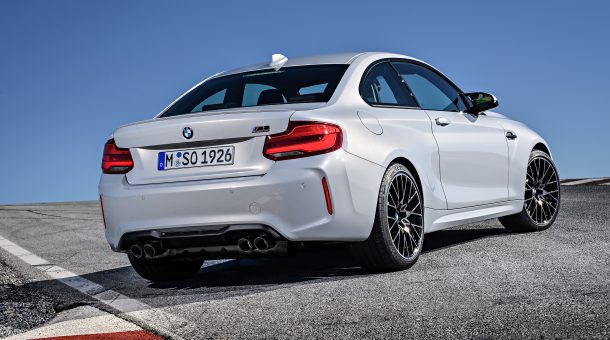
[Image: BMW]

More by Steph Willems









Comments
Join the conversation
Ummm...der Konkurrenzkampf, you mean?
I propose we only consider the count of stick-shift high-end German vehicles. In that case, the other manufacturer from Stuttgart might be quietly moving into the lead?