

Lincoln Aviator: Right-sized SUV Cleared for Takeoff

Remember that scene where a severally obsessive-compulsive Howard Hughes (played by the boy from Titanic) can’t stop repeating the same phrase in the movie The Aviator? I suspect a similar phrase hung in the minds of Ford Motor Company executives while signing off on this model.
A large-ish, rear-wheel-drive, three-row crossover (SUV, according to Lincoln) is surely just the ticket to make up for declining passenger car sales — after all, is there any evidence to the contrary? The way of the future, indeed.
What’s amusing is that, in this case, Lincoln’s future success appears to rest partially on a model resurrected from the past. The first Lincoln Aviator graced our landscape for just three model years, 2003 to 2005, and looked very much like a shrunken Navigator. Well, the second-generation model is clearly cut from the same cloth as its larger sibling, but differences abound.
Scheduled for a Wednesday reveal as a “production preview,” the upcoming Aviator eschews the Navigator’s body-on-frame construction for Ford’s modular CD6 platform, shared with the next-generation Ford Explorer. Both models will bow next year as 2020 models (there’s no mention of the Aviator in FoMoCo’s 2019 order guide).

Like the Navigator, this utility arrives in a rear-drive format, though four-wheel traction will surely be on offer for buyers seeking insurance against inclement weather. We hardly think Aviator owners will venture off-road.
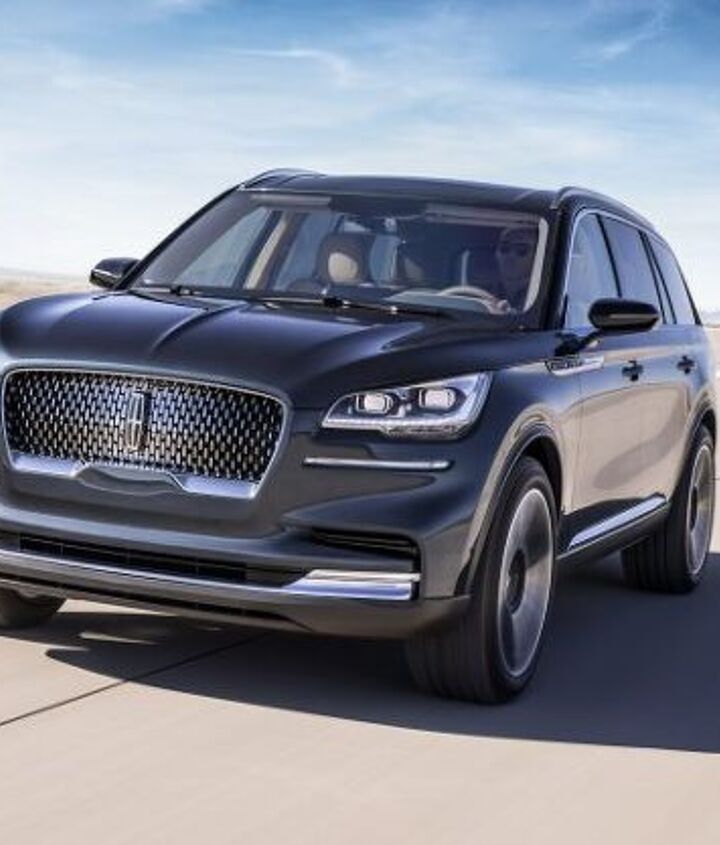
Thanks to its smaller size, it’s easier to appreciate the Aviator’s rear-drive proportions. Long in hood and front fender, the vehicle appears crouched on its haunches, ready to spring forward. Its hoodline — not nearly as flat as the Navigator’s — curves towards a now-standardized Continental-esque grille, flanked by a variation on the larger SUV’s headlamps. Actually, it seems the entire front fascia was lifted from the Navigator, placed in an oven, then allowed to soften slightly.
The Aviator’s flanks are, mercifully, not as slab-sided as its stablemate, though the blacked-out pillars seem awfully familiar. Upper and lower window trim comes in heavier, shinier doses, and a chrome-ringed model nameplate appears on the upper front fenders and doors, just below a sharp character line connecting headlamp to taillamp. Those rear lights stretch the width of the liftgate.
It’s a new Lincoln, alright. No mistaking it.
Lincoln doesn’t delve into powertrain specifics in its media release, stating only that a twin-turbocharged powerplant graces the area below the hood. We know this to be the brand’s 3.0-liter V6, perhaps making more than the 400 horsepower and 400 lb-ft of torque enjoyed by Continental owners. It’s the same engine destined for the Explorer ST. Expect a 10-speed automatic transmission to handle the shifting duties.
In keeping with Ford’s electrification plan, buyers can order a plug-in hybrid variant without losing the twin-turbocharged engine. Range and motor output remains a mystery.
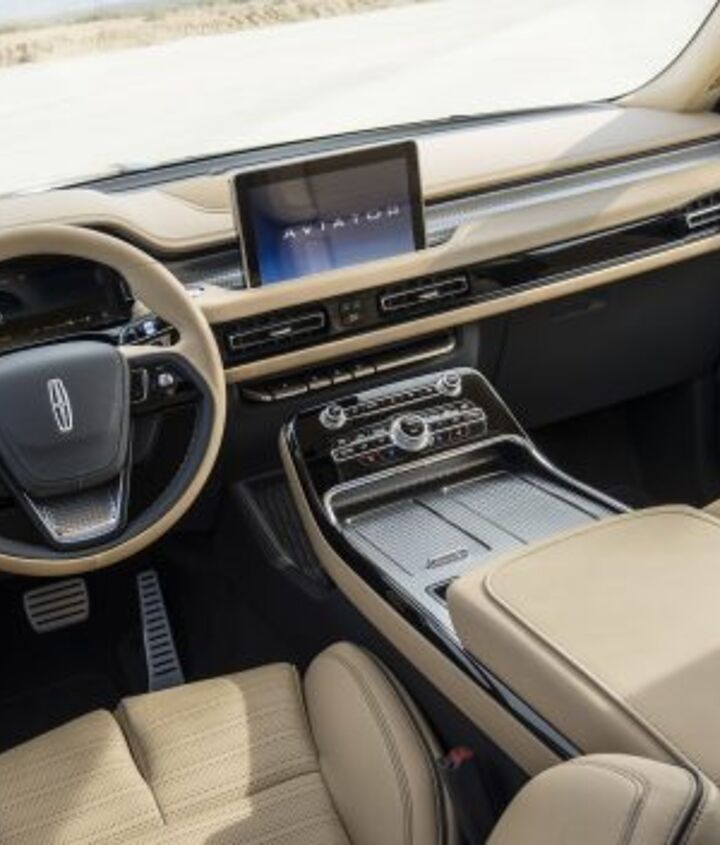
Inside the Aviator’s cabin, you’ll find 30-way adjustable front seats and reclining second-row thrones that slide forward for easier access to the third row. A 12-inch digital gauge display is configurable in a number of drive modes. Safety comes in the form of Lincoln Co-Pilot360 —an upscale version, I guess, of the suite of driver aids you’ll find on vehicles as lowly as the 2019 Ford Fusion.
One novel feature making its debut on the Aviator is the automaker’s “Phone as a Key” technology. Via the Lincoln Way app, owners can use their smartphone to unlock and start the vehicle (and perform other fob-like functions), no fob required. If their phone goes dark at the worst possible moment, drivers can enter a code into the external keypad to unlock the vehicle, then start the vehicle using the touchscreen. Owners who potentially remember buying the original Aviator might feel more at home with a fob. Surely, there’ll be one.
These owners can also further their relationship with the Aviator through the car’s “effortless” services. Say you’re so involved in adjusting your seat, you neglect to notice the fuel tank’s running low. Sync will “prompt” your attention via the gauge cluster display, then use its navigation services to point your towards the nearest pump. (This is basically the opposite of what company chairman Bill Ford experienced earlier this decade.)
Another feature just screaming for rigorous, real-world testing is a suspension setup that adjust the dampers in response to hazards seen by the vehicle’s forward-facing camera. With pothole season in full swing, we’re upset this rig isn’t plying the roads yet.
The Aviator can’t come soon enough for Lincoln. Sales of Lincoln brand vehicles in the U.S. seemed to hit a post-recession peak in 2016, falling every so slightly the following year. Over the first two months of 2018, volume fell 23.4 percent.
[Images: Ford Motor Company]

More by Steph Willems









Comments
Join the conversation
Stop, just stop screwing with the rooflines on the SUVs designed for humans. The aesthetics are tiring and reduced head clearance is truly inane. Please prove to me someone on the product team is older than 12. Thx.
Can I ask what is the point of the this, or any other Glorified Minivan being RWD? The hardest thing this will do is driving the kids to soccer practice!