'Green Cars Only' Laws: Coming to a Debate Near You

Steph Willems
by Steph Willems
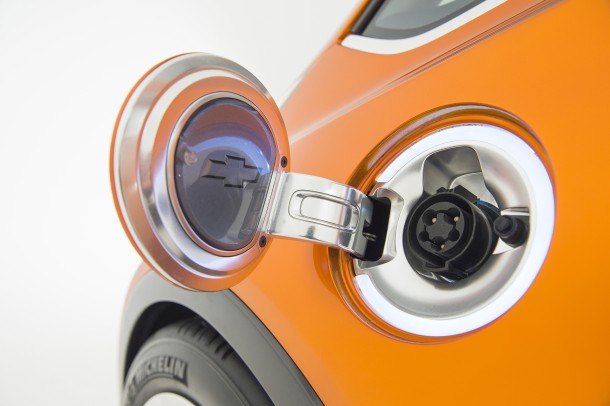
When you’re in conversation with a self-described urbanist, it’s usually impossible to avoid numerous references to Amsterdam, that progressive utopia of bikes, tulips, marijuana-smoking tourists, and more bikes.Well, expect to hear about it even more, now that Dutch parliament has passed a Dutch Labor Party motion to ban the sale of internal combustion vehicles in that country after 2025, according to Auto Express. The bill, which requires senate approval to become the law of the land, would see existing gas and diesel vehicles grandfathered, and the sale of new ones banned.The legislation is the latest in a rising wave of national and subnational dictates aimed at removing pollution-emitting vehicles from roads, or private vehicles as a whole. London’s downtown will only be accessible by Ultra Low Emission Vehicles (ULEVs) after 2020, and Paris will ditch diesels at the same time, but the Netherlands law ups the ante a great deal.Is this an insidious attempt to limit personal autonomy under the guise of environmental stewardship? Doubtlessly, there are many who will see these laws as a gateway to a greenwashed gulag, but this is the direction that society (or at least those running it) is taking us.One person’s blissful utopia is another’s dystopian superstate.Regardless, expect to hear this issue raised at a town or city council meeting near you, if you haven’t already.After all, this isn’t just a Netherlands issue, or even a European Union one (the EU has pushed for a gas-free continent since 2011). Guess which eight states also want to ban gasoline-powered vehicles by 2050? Your guess — assuming it’s based on political stereotypes — is likely correct.But back to the Dutch law, and the logistics of it. Of all European countries, the Netherlands seems better equipped than others to handle becoming gas-free zone. First, its gasoline prices are among the highest in Europe, with lower-octane gas costing 1.55 euro ($1.76) per liter at the beginning of April. That price came close to touching two euros per liter between 2012 to 2014.So, the Dutch are already used to being penalized for car ownership. Secondly, the country’s electricity prices are mid-pack for the EU, and among the lowest of the European countries people actually talk about. Denmark, for example, has the highest electricity rates (thanks to the Scandinavian taxation that urbanists never fail to mention), a figure that seems to correspond with their divorce rate.Where is Elon Musk’s only European Tesla assembly plant, you ask? Why, it’s in Tilburg, Netherlands. The country also boasts an EV takeup rate of about 10 percent.The country is also small, its population clustered in cities, and it has highly developed bike and transit infrastructure. Meaning that getting home from work (or the pub) without a car is easier than in, say, Iowa or Manitoba.Simply put, the necessary infrastructure is in place, and the area is geographically concentrated. That’s not the case in many other jurisdictions where activists want to leap from point A to point Z without having to do all of the incremental (but necessary) steps in between.So, if the Netherlands law comes to pass, that country will probably be able to quickly adapt to having their gasoline cars treated like books in Fahrenheit 451. However, for those sporty Dutch born with a steering wheel in their hands, the Tesla Model 3 can’t come soon enough.[Image: General Motors]
Steph Willems
Steph Willems

More by Steph Willems

Comments
Join the conversation
2 of 33 comments
  • Voyager Voyager on Apr 20, 2016

    Again, this will not be implemented, since Holland is not allowed to do this within the EU. And again, the proposal was to forbid the sales of ICE cars by 2025. That means that you can drive your old gas-guzzling clunker way passed the year of 2025. As a matter of fact, Holland still has a fiscal arrangement in which 40 year old cars are road tax exempt.

  • Pch101 Pch101 on Apr 20, 2016

    This is the sort of thing that is regulated at the EU level, so I would not presume that the Dutch parliament has the legal authority to impose such a law.

  • Forward Observer Tesla cash on hand is $45 billion. That is a large mattress.Ford Motor Company market cap is $46 billion. Wait, forget I said that.
  • Pianoboy57 I would never buy this even if i had the money. What makes it so special? Limited Edition? That doesn't mean anything at the BHPH lot.
  • 6.2deadlifters Because of the current administration no cheap car can exist. US worker SalariesUS sourced materials with costs from US salaries aquiring materials.US UnionsUS corporationsTARIFFS against trade partnersAll these things prevent a 'good' 'reliable' 20,000$ 4-door 4-passanger car capable of 4-start offset and side impact crash protection.Game-Set-Match, end of line. No possible outcome. No discussion possible. every american loses.
  • Forward Observer The last time I had a door off my truck I hung it from my Little Giant ladder. But I was only replacing the hinge pins.I'm sorry if this sounds smarmy or smug, I am working on my people skills. (My therapist says I have a long way to go to catch up with some of you.) Would smarmy and smug come in handy if I worked for an automotive dealership? (I wonder.)
  • Arthur Dailey Auto 'journalists' should stop referencing the average new car purchase price and instead report on the mean price. We all understand that the glue of luxury vehicles and full size pickups inflate the average price.For me, 'affordable' hovers around the $35k mark.Under current N.A. standards, hatchbacks, stations wagons and non-luxury coupes are basically a lost cause.Personally I would like to see Canada convert to accepting vehicles that have passed the European standards, rather than adhering only to N.A. standards. That would allow for the importation of vehicles such as Dacias, Skodas, and yes more Fiats. Also some models for Japanese and Korean manufacturers that currently are not sold in North America. It may even help Mitsubishi in the Canadian market and allow for the return of Suzuki. Having more small, affordable vehicles available is not a bad thing.
Next