


Mercedes to Focus on Premium Luxury Vehicles Again

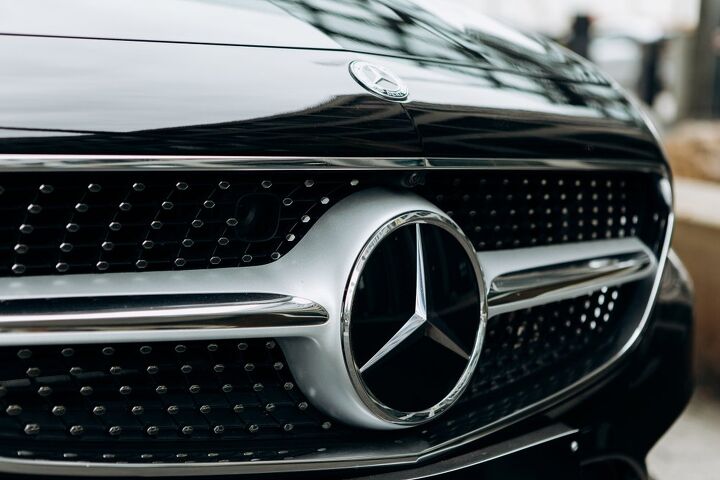
Mercedes-Benz has said it will cut back its entry-level offers to better prioritize premium vehicles with loftier margins. While this strategy has become relatively uncommon throughout the industry, even among some mainstream brands, Mercedes has historically been synonymous with high-end luxury cars. One wonders why it bothered chasing volume to begin with, especially since it doesn’t seem to have panned out for the company.
While executives had previously hinted at its revised strategy in interviews, Mercedes officially unveiled its plan to investors on Thursday. The German brand will focus investments on top-of-the-heap models like the S-Class at the expense of entry-level products that have failed to garner juicy profits.
“What has always been the core of our brand is now also the core of our strategy: the luxury segment. We are further sharpening the focus of our business model and product portfolio in order to maximise [sic] the potential of Mercedes-Benz even in challenging conditions. At the heart of that is our goal to build the world’s most desirable cars,” stated Ola Källenius, Chairman of the Board of Management of Mercedes-Benz Group.
The company is basically taking into account today’s supply chain constraints (e.g. chip shortages, bottlenecks, increasing cost), realizing that volume-focused models with lower MSRPs won’t net it the same kind of profits as a few six-figure G 550. We only need this year’s financial metrics to see that plan in action. In the first quarter of 2022, Mercedes sold 10 percent fewer vehicles than the same period in 2021 (which was already a lean year). However, its profits were up by a whopping 20 percent within the same timeframe.
From MB:
Mercedes-Benz will recalibrate its product portfolio, allocating more than 75 [percent] of its investments to develop products for the most profitable market segments. As part of this sharpened strategy, Mercedes-Benz aims to grow the sales share of its Top-End vehicles by around 60 [percent] by 2026 versus 2019 and intends to achieve higher quality growth and a further significant increase in profitability and resilience, striving for an operating margin target of approximately 14 [percent] by mid of the decade in favourable [sic] market conditions. This greater focus on the top end of the market should enable the company to deliver a strong financial result even under more challenging market conditions. The company’s strategic decision to become fully electric by 2030 – wherever market conditions allow – and the ambition to become CO2-neutral by 2039 are integral elements to enhance the connection between luxury and sustainability.
In 2021, the Mercedes-Benz S-Class reported an increase of 40 percent. Meanwhile, the high-performance AMG and uber-luxury Maybach arms set records of their own. Mercedes believes that the market for premium vehicles will remain strong, whereas entry-level products will not.
To account for this, it’s going to rejigger its product portfolio and development team to focus on Mercedes-AMG, Mercedes-Maybach, “Top-End” models from Mercedes-EQ, the S-Class, the G-Class, and the GLS. There will also be some room carved out for limited-edition models and exclusive collaboration vehicles, though the company did not get into specifics.
Meanwhile, its more humble products, such as the A-Class, will be seeing fewer variants. We may even witness some models being removed from the lineup in the coming years. Customers that decide to order from Mercedes will soon notice that sweeping equipment packages will replace some individual options. The company said that reducing complexity will allow it to offer compressive packages based upon regional trends while saving itself a lot of trouble during production. It also allows the brand to charge more in most cases, broadening profit margins.
However, this will require some tweaking at the factory. Executives have explained that they’re not interested in chasing volume, but that they’ll still need to retool some facilities to optimize new production routines. Though your author would argue that there’s nothing luxurious about nixing built-to-order vehicles.
Markus Schäfer, head of development at Daimler, was quoted as saying by Automotive News, that the transition toward reduced complexity will dramatically change logistics in just about every market it currently occupies. But he remained confident that it would ultimately benefit Mercedes’ bottom line.
“The willingness to pay is there,” he said. “Many, many customers are ready to pay the extra price for luxury.”
[Image: Franz12/Shutterstock]
Consumer advocate tracking industry trends and regulations. Before joining TTAC, Matt spent a decade working for marketing and research firms in NYC. Clients included several of the world’s largest automakers, global tire brands, and aftermarket part suppliers. Since adding automotive writing to his repertoire, he has become an ardent supporter of the right-to-repair movement, discussed the status of the automotive sector on national broadcasts, participated in a few amateur rallying events, and driven more rental cars than anyone should ever have to. Handy with a wrench, Matt grew up surrounded by Detroit auto workers and learned to drive by twelve. Alleged to be contrarian, Matt claims to prefer understeer and motorcycles.
More by Matt Posky









Comments
Join the conversation
"Though your author would argue that there’s nothing luxurious about nixing built-to-order vehicles." Absolutely correct. Luxury and exclusivity demand personalizing a vehicle not paying for bloated option packages, many of which contain items and features not wanted or used. The manufacturers make their profit by loading packages onto customers who really want one or two features but have to pay for several more unwanted features. Mercedes, as are most manufacturers, is now purely profit driven, almost to the detriment of the cars they make. They are in business to make money but that's probably not the approach a "luxury" vehicle manufacturer should boast about. Then again, perhaps customers these days really don't care anymore and just willy-nilly hand over small fortunes for these option loaded cars that often vary only by color. And as we all know, many folks want their car/house/TV/food/coffee/any products...instantly. Few want to wait.
So will the "premium" Mercedes herald the return of the bank-vault build quality, the near-eternal longevity of the powertrains, the revival of the Teutonic driving experience, and the end of all the overpriced, breakable plastic parts in the engine bay? I doubt it.