


We'll Have to Build a Ton of EV Charging Points If Electrification Is Going to Work

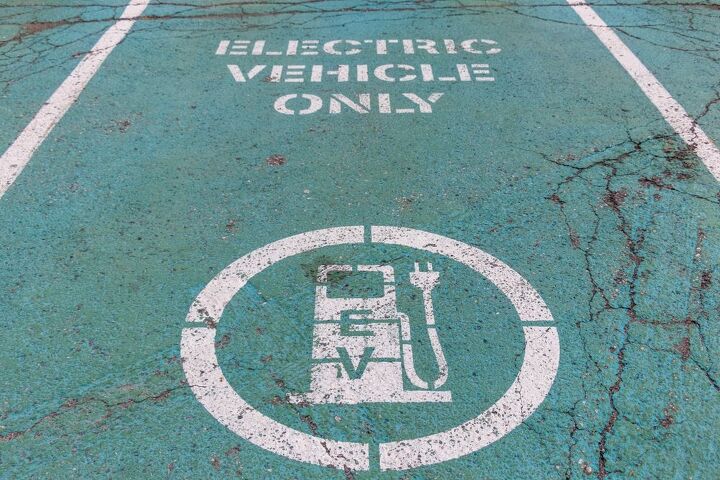
If you hop around this country on a semi-regular basis, you’ve likely noticed that California seems better equipped to endure the onslaught of electric vehicles poised to reshape our society. For all the complaints about the state’s managerial issues and a homelessness situation that’s spinning wildly out of control, it’s one of the few places you can regularly encounter EV charging stations without actively looking.
It’s also an area you see them frequently in use. Many states still harbor large distances between charge points that don’t see a lot of use in the first place. But things are different in California. There are dedicated EV stations along most major highways, increasing in frequency the closer to you get to metropolitan hubs. Once inside the city limits, there are are countless office parks, service stations, and parking structures offering ground-floor charging — many of which will actually have cars plugged into them.
You’ll also notice many are broken and some don’t let you pay via a single swipe of your credit card. Instead, the machine will ask you to make an account with whatever company is offering the service, often trying to push you into using a proprietary app. It’s unfortunate and probably the last thing you want to do after scouting out a particularly well-hidden station because the first three you came across were occupied or out of order.
Of the 60,000+ public charging connections estimated in the U.S. by the Department of Energy, roughly 22,000 reside in California. Automotive News is concerned this won’t be sufficient to help the state embrace electrification at the frequency it’s aiming for. The brunt of those stations are said to be “a patchwork” of slower-charging ports that take several hours to juice up modern-day EVs. The outlet argues California will need newer, faster stations made available in more easily accessible areas if electrification is ever to truly take off like the state’s leadership desires.
From Automotive News:
While early EV adopters often charge at home, public options are critical to promote ownership by people who need to charge at work or add miles while on the road, advocates say. The California Energy Commission estimates about 100,000 to 150,000 public chargers are needed [in the state] to support a goal of 1.5 million zero-emissions vehicles by 2025.
“We know when we talk to EV candidate drivers that, beyond the upfront cost of the vehicle, their next questions are commonly: How far can this thing go? And, where can I refuel my car?” said Josh Boone, executive director of the nonprofit group Veloz, whose members include automakers, government agencies and EV charging companies.“So we know that having a reliable, redundant, ubiquitous charging network up and down the state of California is really important to a successful EV market,” Boone told Automotive News. How much investment is required to reach those goals is a difficult question because EV range and charging speeds are rapidly improving. “I don’t think anyone can answer that question. I think what we know is that we need more,” he said.However, it’s a still tale of two very separate worlds. As someone who routinely makes the 600-mile journey between New York and Michigan, your author has noticed the number of electric vehicle one sees quickly drops the further west you travel on I-80. By the time you hit Pennsylvania, EV charging points are mostly limited to Walmart shopping centers and state parks located a few miles off the main highway — giving motorists something to do while they wait for their vehicle to recoup energy. But investigating these locations often shows them to be empty.
It’s like that in a lot of places that aren’t California.
While ramping up charging points would assuredly ease the burden and assuage a few range-related fears in the Golden State, there are many issues it doesn’t address. The price of EVs remains prohibitively high for many (even with government incentives) and their maximum range will continue to remain a problem until battery-driven vehicles can charge as quickly as their gas-powered brethren — or start offering ranges on the outer limits of what a single driver can endure per day.
In truth, setting up more EV charging points seems like an expensive bandaid that tries to fix a fundamental limitation of present-day battery technology. Future EVs will continue to need new charging stations as the years roll on. But what else can we do if we’re supposed to get serious about the global electrification of cars?
Whereas automobiles that burn gasoline don’t need a new type of pump as they evolve, EVs will continue requiring new charging areas with ever-higher output and new ports. Faster charging means more current and we’ve already seen how the first generation of electric vehicles are not compatible with the latest round of DC fast-chargers. It’s not a stretch to presume this event could repeat itself several times until EVs finally surpass internal combustion vehicles in terms of range or “refueling” speed. On the upside, it ought to guarantee plenty of construction projects through the middle of this century. Still, it’s going to take a nearly unfathomable amount of money to make this happen on a global scale, and it’s doubtful automakers will want to continue picking up the check after 2025.
[Image: JL IMAGES/Shutterstock]
Consumer advocate tracking industry trends and regulations. Before joining TTAC, Matt spent a decade working for marketing and research firms in NYC. Clients included several of the world’s largest automakers, global tire brands, and aftermarket part suppliers. Since adding automotive writing to his repertoire, he has become an ardent supporter of the right-to-repair movement, discussed the status of the automotive sector on national broadcasts, participated in a few amateur rallying events, and driven more rental cars than anyone should ever have to. Handy with a wrench, Matt grew up surrounded by Detroit auto workers and learned to drive by twelve. Alleged to be contrarian, Matt claims to prefer understeer and motorcycles.
More by Matt Posky









Comments
Join the conversation
So let me get this straight, the Federal Government is giving out $1.875 BILLION dollars of tax subsidies per manufacturer so that wealthy people can own luxury vehicles and promote the technology. But there are drastically too few charging stations around so people can't drive their taxpayer-mobiles. What if instead of a taxpayer subsidy, there was a $7,500 earmark for every EV sold that would have gone into building a national charging network??? I'm curious at what point the electrical grids of major metropolitan areas would fail if electrification of vehicles actually happened? 10% of cars on the road? 15%? Oh boy, the mind boggles at what could have been with EV's, instead we have this crap. I'm almost to the point of putting my resources behind that "clean coal" that's all the rage on the east coast.
Not sure which subject elicits more passion here... Electric cars or motor oil loyalties/change intervals?